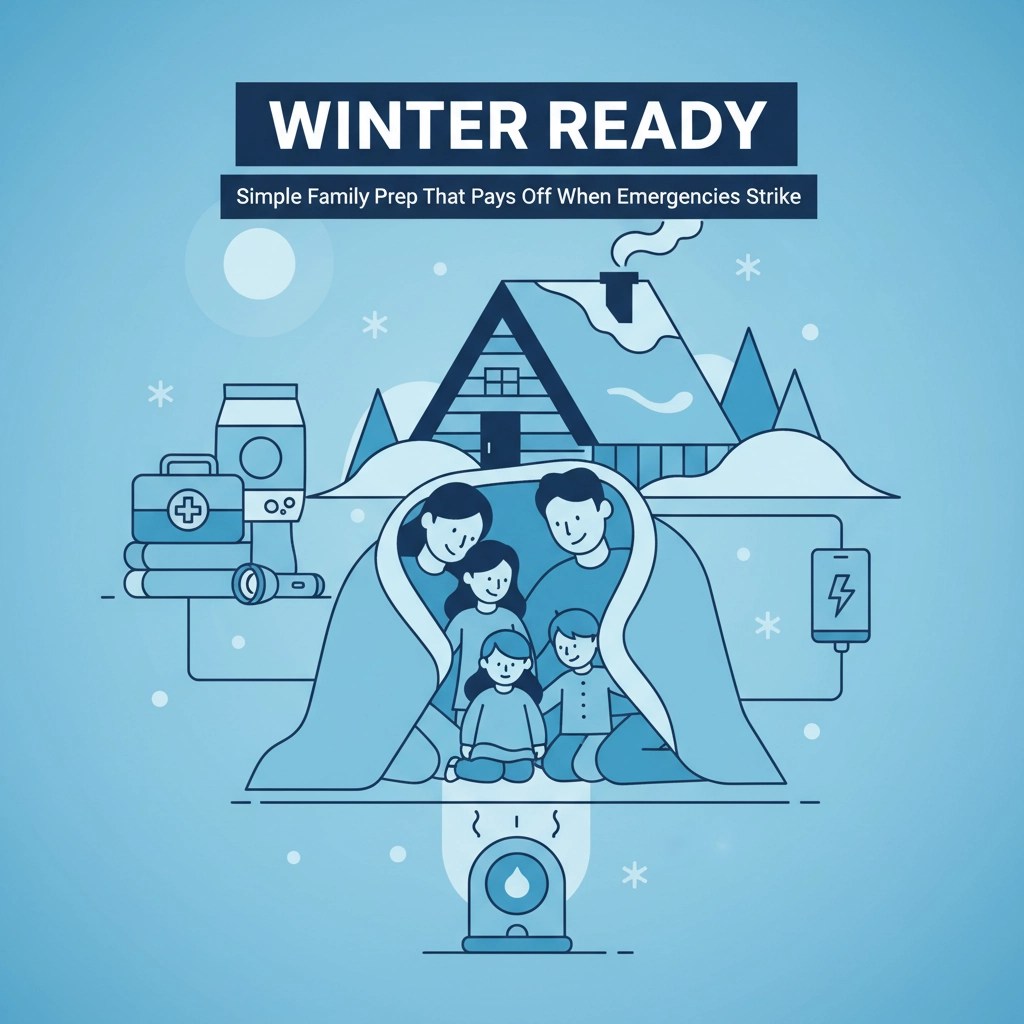
When winter weather turns nasty, it doesn't give you a heads up. One minute you're comfortable at home, the next you're dealing with power outages, frozen pipes, or being snowed in for days. The families who handle these situations best aren't the ones with the most expensive gear: they're the ones who took some time to prepare before the storm hit.
Here's the thing about winter emergencies: they're predictable in their unpredictability. You know they're coming, you just don't know exactly when or how severe they'll be. That's actually good news, because it means you can get ready now, while it's still easy to grab supplies and make plans.
Building Your Winter Emergency Kit
The foundation of any winter preparedness plan is a solid emergency kit. Think of it as insurance: you hope you'll never need it, but you'll be incredibly grateful it's there if you do.
Start with the basics: water and food. Store one gallon of water per person per day, and aim for at least three days' worth, though two weeks is even better for winter situations. Don't forget your pets: they need water too. For food, focus on non-perishables that don't require cooking: canned goods, energy bars, dried fruits, nuts, and crackers. Grab a manual can opener while you're at it: electric ones don't work when the power's out.
Power and communication are your lifelines. A battery-powered or hand-crank radio keeps you connected to weather updates and emergency information. Stock up on flashlights and batteries: more than you think you need. Phone chargers that don't rely on wall outlets are gold during outages. A NOAA Weather Radio with tone alert will wake you up if severe weather develops overnight.

Warmth saves lives in winter emergencies. Extra blankets, sleeping bags, and complete changes of warm clothing should be stored in waterproof containers. Include long-sleeved shirts, long pants, sturdy shoes, and extra socks. Hypothermia can set in faster than most people realize, especially if clothing gets wet.
Medical supplies matter more when help can't reach you. Beyond a standard first aid kit, make sure you have enough prescription medications for at least a week. Include glasses, contact solutions, and any medical devices family members depend on. Don't forget basic hygiene supplies: moist towelettes, garbage bags, and toilet paper become precious when you're stuck at home without running water.
Winterizing Your Home
Your house is your primary shelter during winter emergencies, so it needs to be ready before the storm hits.
Prevent frozen pipes before they become a disaster. Insulate outdoor pipes and faucets. Know where your main water shut-off valve is and how to turn it off: if pipes do freeze and burst, you'll need to act fast. Keep cabinet doors open under sinks during extreme cold to let warm air circulate around pipes.
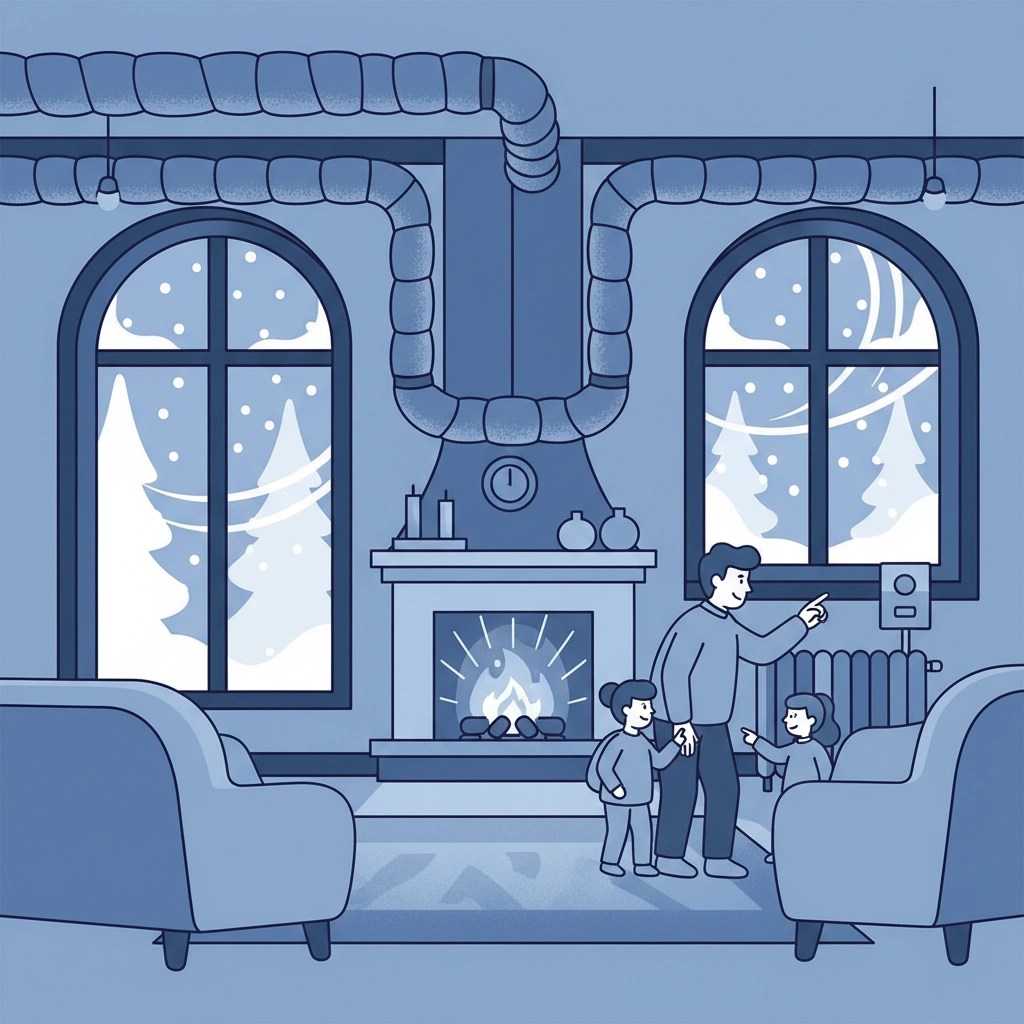
Heating safety is non-negotiable. Never use your stove or oven to heat your home: this creates serious fire and carbon monoxide risks. If you have alternative heating sources like space heaters or a fireplace, make sure you know how to use them safely before you need them. Clean your chimney annually and test your smoke and carbon monoxide detectors. Having a generator can be a lifesaver, but only if you know how to operate it safely and never run it indoors.
Protect your appliances and food. When the power goes out, keep refrigerators and freezers closed to maintain safe temperatures longer. Unplug small appliances to protect them from power surges when electricity returns. Know that a full freezer will keep food frozen for about 48 hours, while a half-full freezer only lasts about 24 hours.
Creating Your Family Emergency Plan
The best emergency supplies in the world won't help if your family doesn't know how to work together during a crisis.
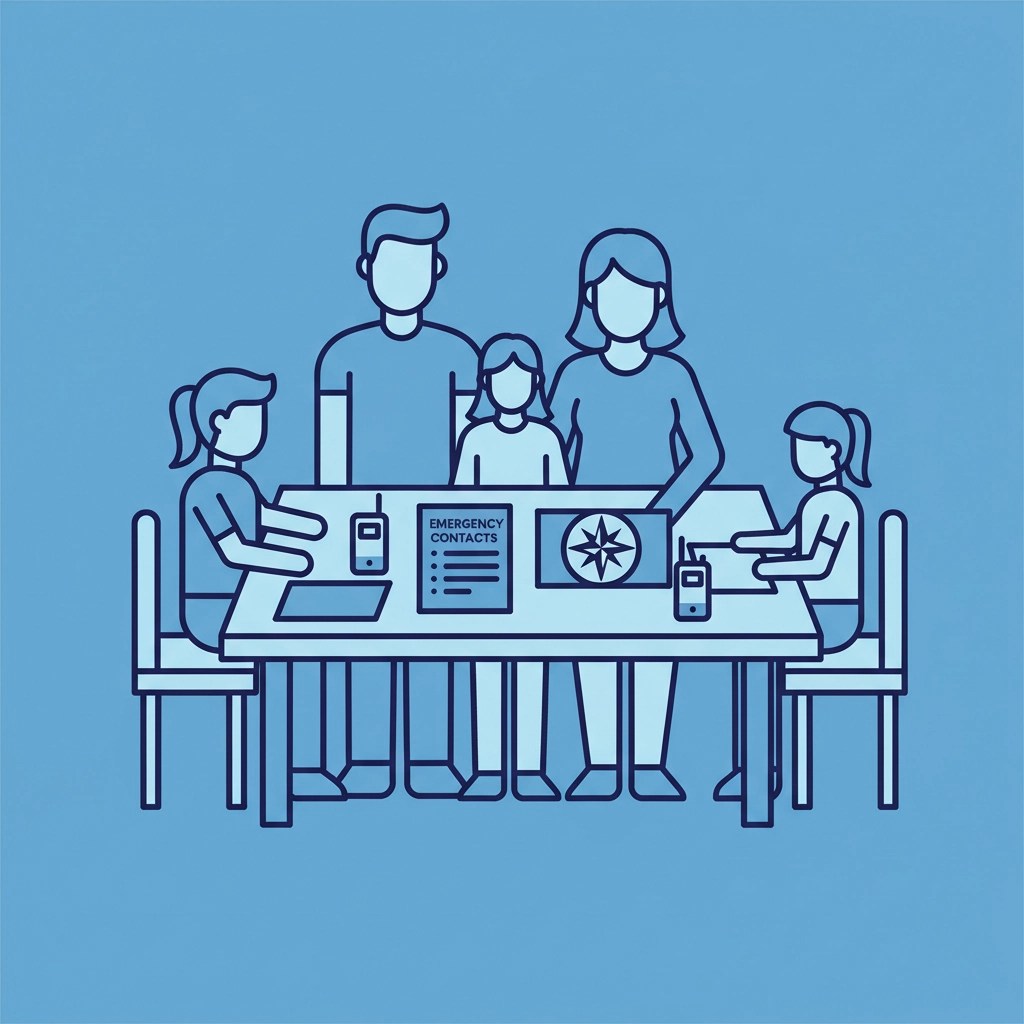
Communication is everything. Write down important phone numbers: don't rely on cell phone contacts when batteries die. Post these numbers where everyone can see them. Choose an out-of-state contact person who can help coordinate information if local phone lines are jammed. Make sure every family member knows this person's number by heart.
Assign responsibilities ahead of time. Who's in charge of grabbing the emergency kit? Who checks on elderly neighbors? Who handles the pets? When everyone knows their role, things happen faster and more smoothly when stress levels are high.
Practice your plan. Run through scenarios with your family. What if the power goes out at night? What if someone's not home when the storm hits? What if you lose heat? These conversations feel awkward until you need them: then they feel invaluable.
Vehicle Preparation
More than 5,000 people die annually in weather-related vehicle crashes, with hundreds of thousands more injured. Your car needs winter prep just like your home.
Get your vehicle winter-ready before you need it. Check all fluid levels, ensure lights work properly, test your heater and defroster, and replace windshield wipers if needed. Keep your gas tank at least half full during winter months to prevent fuel line freeze-ups.

Build a car emergency kit. Include blankets, warm clothes, water, non-perishable food, a flashlight with extra batteries, a first aid kit, booster cables, a shovel, and sand or kitty litter for traction. A small candle and matches can provide emergency heat, but never leave them unattended.
Plan your travel smart. Let someone know your route and expected arrival time before leaving. Check weather and road conditions by calling 511. If conditions are dangerous, don't travel: no appointment or event is worth risking your family's safety.
The Power of Proper Training
Here's where proper emergency training makes the difference between panic and confident action. When your neighbor has a heart attack during a blizzard and EMTs can't get through, knowing CPR isn't just helpful: it's the difference between life and death.
Winter emergencies often mean you're on your own longer than usual. Roads are impassable, emergency services are stretched thin, and professional help might be hours away instead of minutes. That's when the CPR and first aid training you got from Code Blue Safety Skills transforms from "nice to have" to "thank God we learned this."
The confidence that comes from proper training changes everything. Instead of panicking when someone gets hurt, you know what to do. Instead of watching helplessly during a cardiac emergency, you can take action. Instead of making dangerous mistakes with hypothermia or frostbite, you understand the proper response.
Mobile training means your whole family can learn together, in your own space, with scenarios that make sense for your situation. When the instructor comes to you, everyone's more comfortable asking questions and practicing skills they might be embarrassed to try in a classroom full of strangers.
Small Steps, Big Impact
Winter preparedness doesn't have to be overwhelming or expensive. Start with one area: maybe building your emergency kit: and add to it each week. Pick up a few extra canned goods during your regular grocery run. Buy an extra pack of batteries when they're on sale. Test your smoke detectors when you set your clocks back.
The families who handle winter emergencies best aren't necessarily the ones with the most gear or the biggest budgets. They're the ones who took time to prepare before they needed it, who practiced their plans before they were stressed, and who learned life-saving skills before lives were on the line.
Winter is coming whether we're ready or not. The question isn't if you'll face a winter emergency: it's whether you'll be prepared when you do. The good news? With some basic preparation and the right training, you can protect your family through whatever winter throws your way.
Every blanket you store, every phone number you write down, and every skill you learn moves your family from vulnerable to prepared. And when the power goes out and the snow piles up, that preparation pays off in ways you can't put a price on: safety, comfort, and peace of mind when you need it most.